
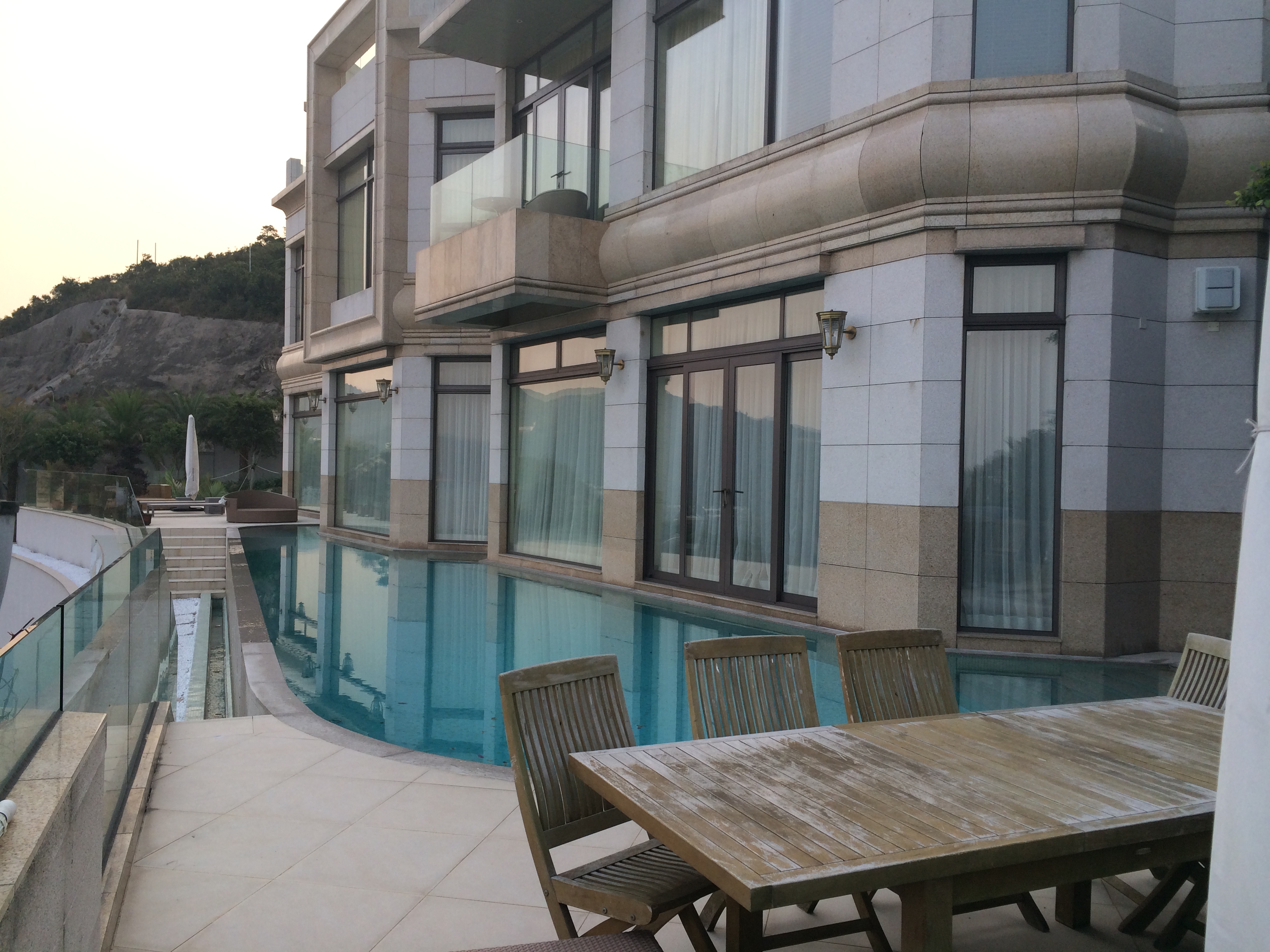
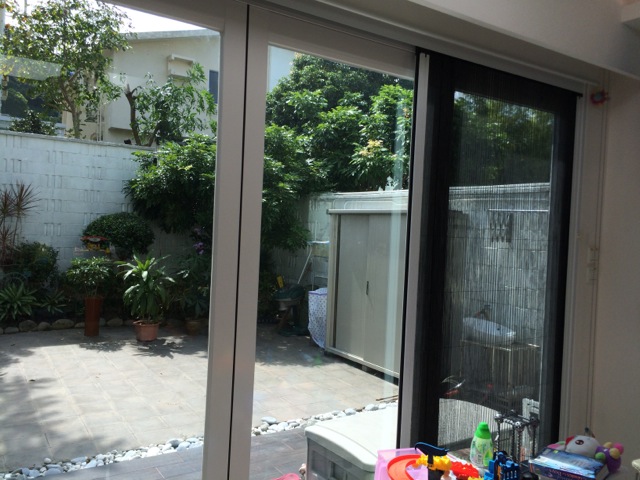
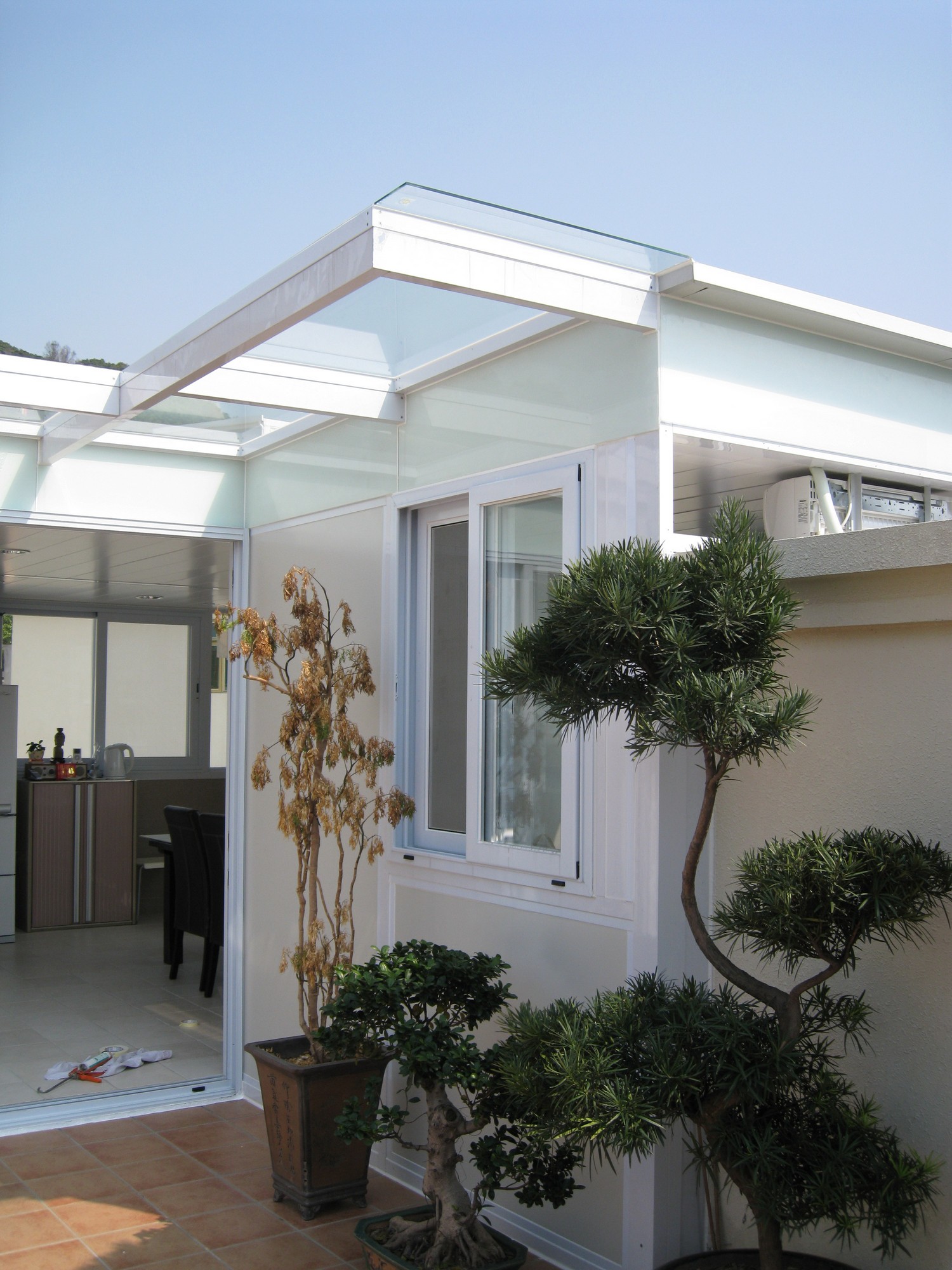
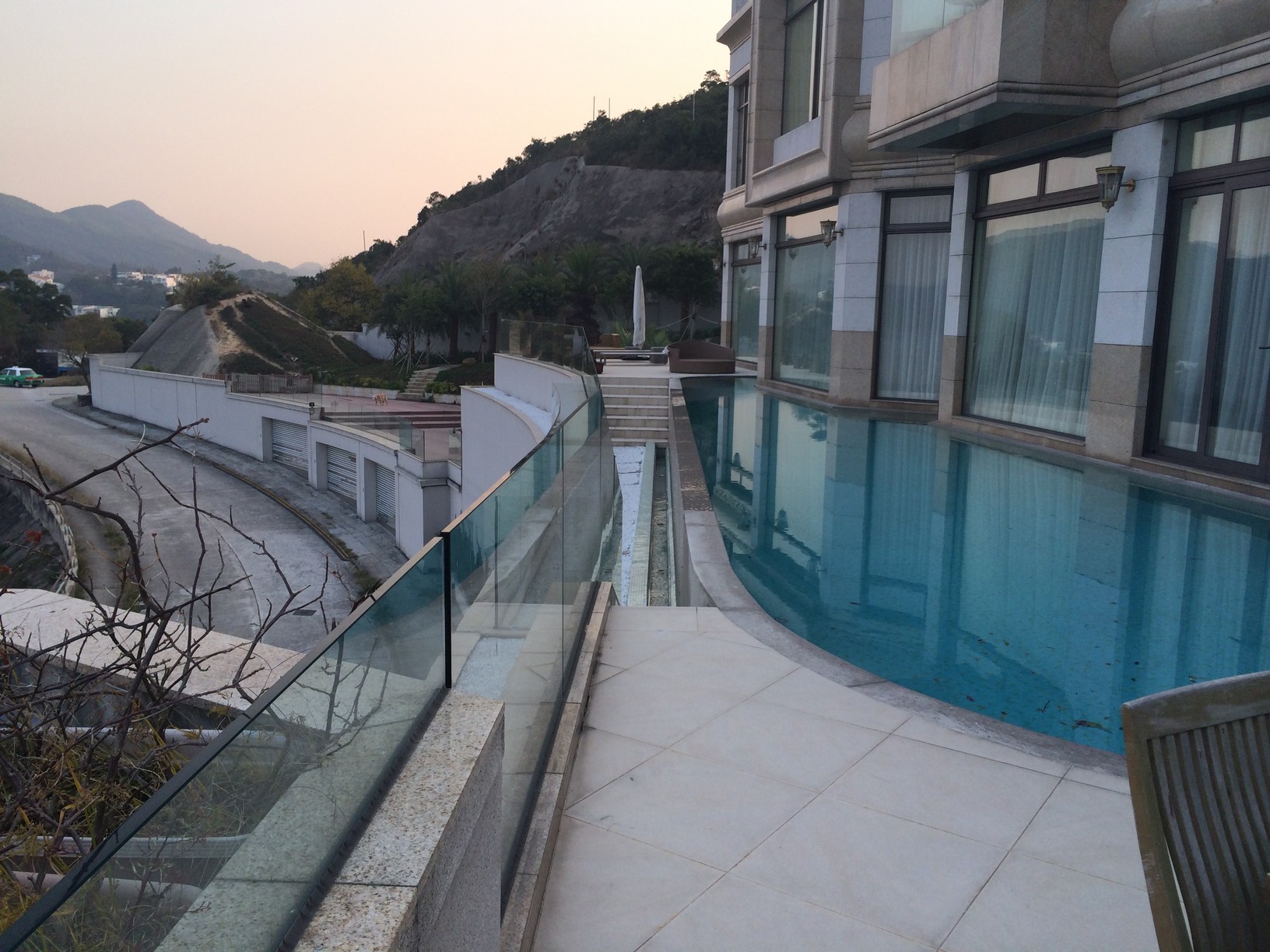
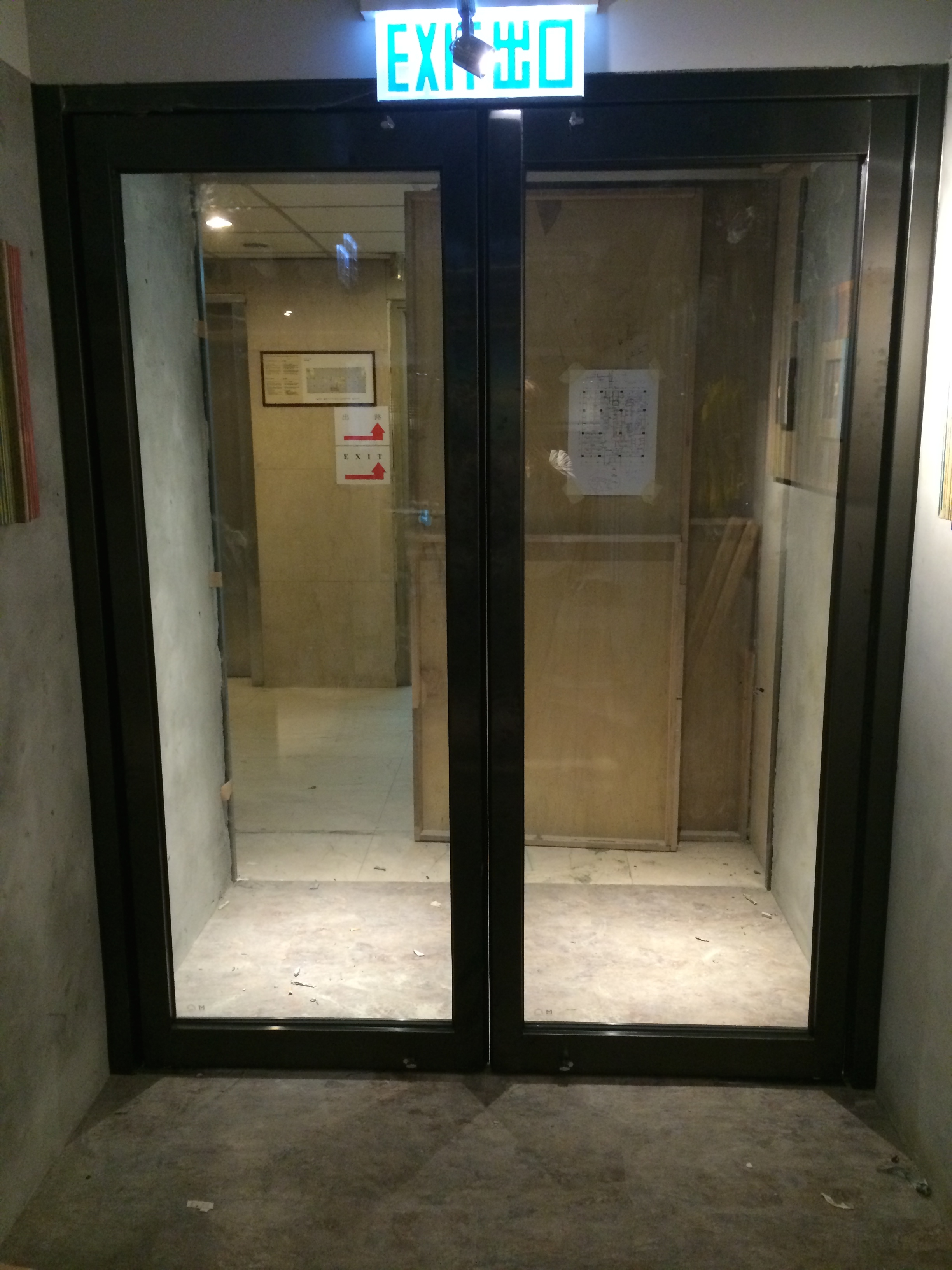
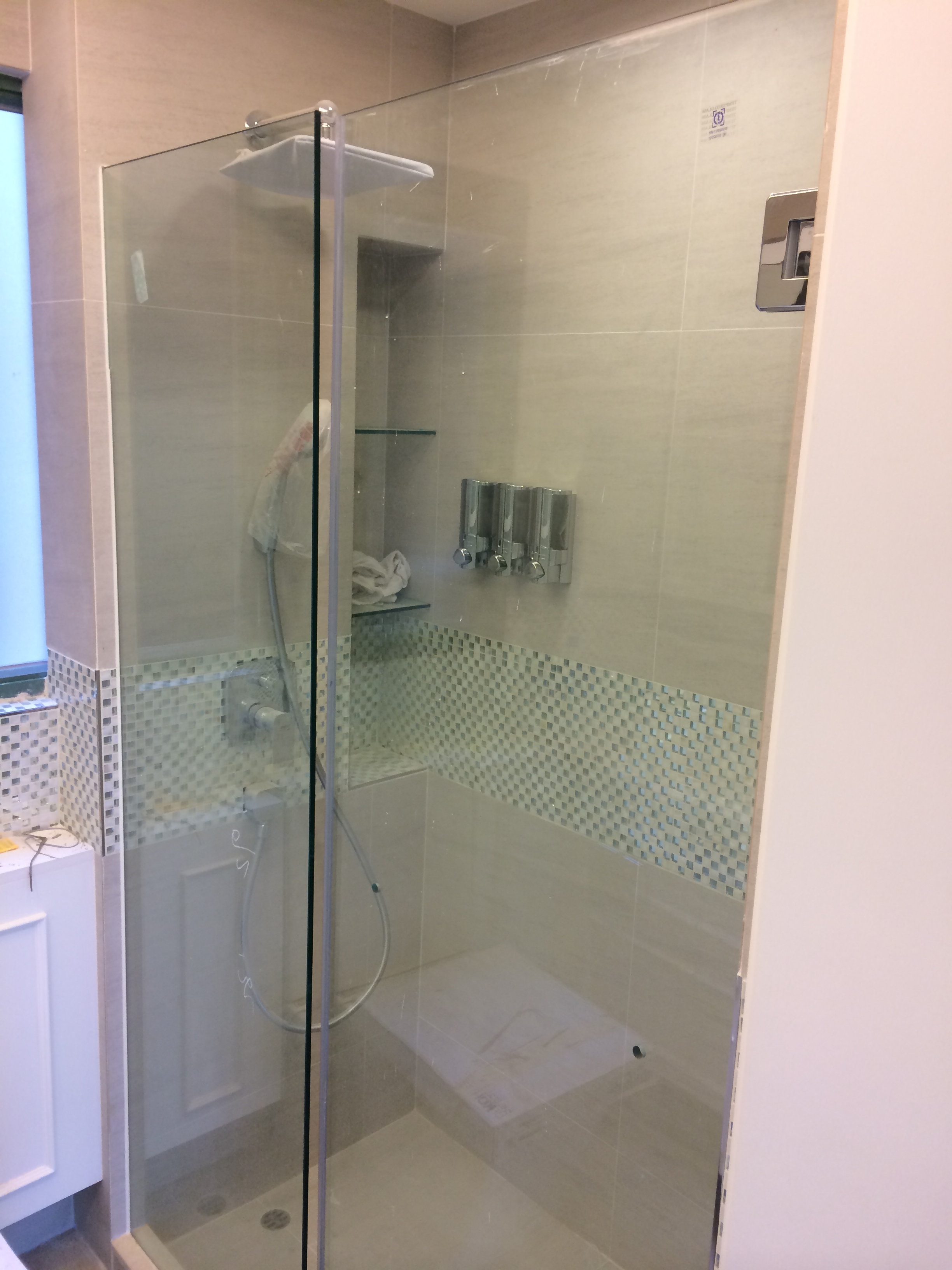
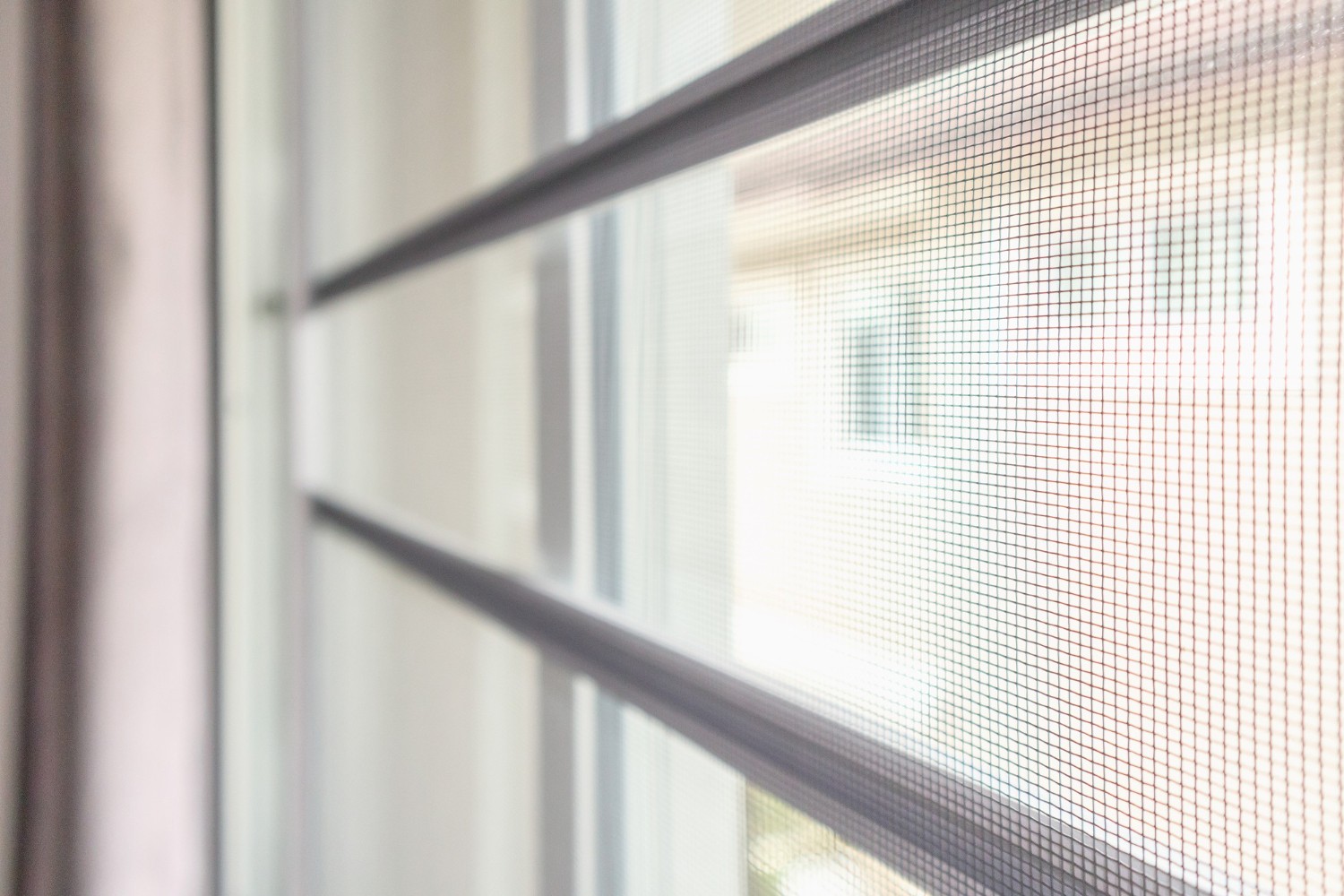
SK Fung aluminium window and glass project: full-height glazing, aluminium windows and glass balustrade

SK Fung 誠建豐・Hong Kong

Mandatory Window Inspection, Aluminium Windows & Glass Works in Hong Kong

SK Fung is a Registered Minor Works Contractor approved by the Buildings Department, Registration Certificate No. MWC(W) 42/2014, with window inspection qualification. We handle Mandatory Window Inspection (prescribed inspection and prescribed repair) and the subsequent submission to the Buildings Department, as well as aluminium window replacement and repair, waterproofing, rooftop glass houses, interior glass partitions, glass balustrades, office glass doors, fire-rated doors, hotel-style shower screens, mirror works and insect screens. Free on-site measurement and design quotation.

This is the English overview page. Detailed service pages are currently published in Traditional Chinese — links below are labelled in English so you can navigate directly. For enquiries in English, call 3709 2164, WhatsApp 6686 7879 or email skfung.hk@hotmail.com. 本頁為英文版;按此返回中文首頁

About us

Qualified, experienced and accountable

SK Fung (誠建豐) is a Buildings Department approved Registered Minor Works Contractor (Registration Certificate No. MWC(W) 42/2014) and holds window inspection qualification. Every technician holds the Aluminium Window Trade Test Certificate issued by the Construction Industry Council Training Academy. With more than ten years of experience, the company offers competitive pricing, reliable workmanship, comprehensive repair and maintenance, and objective professional advice.

Our specialities: replacement of modern aluminium windows; rooftop glass house design; interior glass partitions; prefabricated cabins and storage cabinets; fire-rated doors complying with fire safety requirements; office glass doors; shopfront display glazing; hotel-style shower screens; and high-performance insect screens.

Why this matters for inspection cases: because we hold both the qualification to inspect and our own installation team, the inspection, repair and subsequent submission can be completed in one workflow, with a single party accountable to the Buildings Department. Owners do not need to coordinate a separate inspection company, window contractor and filing agent.

SK Fung aluminium window, glass and waterproofing works company signage in Kwun Tong
Office: Flat F11, 10/F, How Ming Factory Building, 99 How Ming Street, Kwun Tong, Kowloon.

MWIS

Mandatory Window Inspection Scheme: what owners must know

Compiled from Buildings Department, Housing Bureau Independent Checking Unit and Legislative Council public documents.

The Mandatory Window Inspection Scheme (MWIS) and the Mandatory Building Inspection Scheme were fully implemented on 30 June 2012. MWIS applies to private buildings aged 10 years or above (except domestic buildings not exceeding three storeys). Owners served with a statutory notice must appoint a Qualified Person (QP) to carry out the prescribed inspection of all windows and to supervise any prescribed repair found necessary. A pre-notification letter is normally issued about one to two months before the statutory notice; the owner's legal obligation arises only once the statutory notice is served.

Statutory time limits (counted from the date of the statutory notice)
SituationAppoint a QPComplete inspection & repair
Windows of individual unitsWithin 3 monthsWithin 6 months
Windows in common parts (with or without an OC)Within 3 monthsWithin 9 months
Buildings without an owners' corporationWithin 3 monthsGenerally an additional 3 months allowed
Extension requiredApply in writing to the Buildings Department / Independent Checking Unit with justification

Who qualifies as a Qualified Person

A QP must be on a register kept by the Building Authority: Authorized Person (AP), Registered Structural Engineer (RSE), Registered Inspector (RI), Registered General Building Contractor, or a Registered Minor Works Contractor for the relevant class, type and items of minor works in relation to windows. The QP must personally carry out the prescribed inspection. If repair is required, a Registered General Building Contractor or Registered Minor Works Contractor must carry out the works under the QP's supervision. SK Fung's registration number is MWC(W) 42/2014.

Consequences of non-compliance (Buildings Ordinance, Cap. 123)
ItemDetails
Warning letterIssued first to urge the owner to arrange compliance
Fixed penaltyFixed penalty notice of HK$1,500
TimingSince July 2024, fixed penalty notices must be issued within 6 months of the compliance deadline
Prosecution (repeat offenders)On conviction, fine of HK$25,000 and imprisonment for 3 months, plus HK$2,000 for each day the offence continues
Works carried out by the DepartmentCosts and supervision fees recovered from the owner, plus a surcharge not exceeding 20%
Qualification offencesQP not inspecting personally: fine up to HK$250,000; inspection without qualification: fine up to HK$100,000 and 6 months imprisonment

Inspection items and criteria

ComponentCriteria
Glass panesWhether broken or cracked
Window frames and sashesWhether deformed or unstable; whether difficult to open and close
HingesWhether deformed, missing or severely corroded
Rivets and screwsWhether loose or missing; greyish-white powdery substance or corrosion
Locks and staysWhether they operate and lock fully
Gaskets and sealantWhether hardened, shrunk, displaced or cracked

Windows obstructed by renovation work or furniture are not exempted from inspection. Owners should clear obstructions before the inspection date to avoid a second visit. In late 2024 the Government proposed raising the maximum fine to HK$100,000 and the fixed penalty to HK$3,000; these remain legislative proposals.

Submission

Specified forms WI1, WI2 and WI3 (September 2025 version)

FormDescriptionWhen used
WI1Notification of Appointment of Qualified Person and Certificate of Prescribed Inspection / Repair of WindowsWhere the same QP carries out the inspection and supervises the repair
WI2Notification of Appointment of Qualified Person and Certificate of Prescribed Inspection of WindowsOnly where different QPs handle inspection and supervision of repair
WI3Notification of Appointment of Qualified Person and Certificate of Supervision of Prescribed RepairAs above, for the QP supervising the repair
FPN1Notification to the Building Authority disputing liability for an offence under section 40(1BD)When disputing liability in relation to a fixed penalty

The Buildings Department also publishes three sample versions of WI1: completion of prescribed inspection where no repair is required for any unit; completion of inspection and repair where some units require repair and others do not; and completion of inspection and repair where all units require repair. Forms may be submitted through the Department's electronic form platform.

Six common irregularities that get forms returned

Where a submitted form contains irregularities, the Buildings Department returns it without further processing — costly when a deadline is approaching. The six most common issues are:

  1. The address of the building or premises does not match the statutory notice number.
  2. The name of the owner, owner's representative or QP is missing or unsigned.
  3. The date of the certificate or declaration is incorrect (it should be on or after the completion date).
  4. The QP's registration certificate number is incomplete or incorrect.
  5. The QP's signature does not match departmental records.
  6. Form WI2 submitted without the inspection report.

When handling submissions for owners, we check each of these items before filing.

Aluminium windows

Replacement options, hardware and leakage diagnosis

Four replacement approaches
MethodSuitable whenTrade-offs
Full frame removal and reconstructionFrame badly deformed or corroded; leakage at frame-to-wall junctionMost thorough waterproofing; more dust, noise and render making good
Sub-frame (overlay) replacementExisting frame and wall in sound conditionShorter programme, less dust; clear opening slightly reduced
Single sash replacementIndividual sash deformed or glass brokenLowest cost; does not address frame ageing
Parts repairHardware failure, aged gaskets, minor leakageFastest and most economical; a short-term measure if the frame itself is ageing

Leakage: a five-step diagnosis

  1. Sealant at the frame-to-wall junction — cracked, debonded or separated from the wall face.
  2. Waterproof gaskets — hardened, shrunk or displaced so the sash no longer seals.
  3. Drainage holes — blocked by dust or paint, causing trapped water to flow back indoors.
  4. Sash-to-frame closure — hardware not locking fully; sash dropped or deformed.
  5. External render and window sill — cracks allowing water in from outside; replacing the window alone will not solve this.
Leakage or condensation? If droplets are spread evenly over the inside face of the glass and appear on cool mornings, that is condensation — the remedy is ventilation and insulated glazing. Genuine leakage follows a defined path along a joint, fitting or frame base and coincides with rainfall.

Hardware that can be replaced individually

Hinges (stainless steel recommended), top and bottom stays, seven-shape stays, handles, locks, rollers and waterproof gaskets. In Hong Kong's humid coastal environment, hinge corrosion and failed screws are among the most common non-compliant items in window inspections — and most are repairable without replacing the whole window. See the detailed page: Windows, Sliding & Folding Doors(鋁窗/趟門/摺門).

Glass standards

Tempered glass, heat soaking and impact testing

Heat soak treatment matters. The Buildings Department's Code of Practice for Structural Use of Glass 2018 notes that tempered glass is susceptible to spontaneous breakage caused by nickel sulphide (NiS) inclusions, and that tempered glass should be heat soaked during production to avoid this. Departmental common conditions and requirements further provide that tempered glass should be produced in an ISO 9001 certified factory, that every pane should undergo heat soak treatment complying with BS EN 14179-1:2016 or an equivalent international standard, and that the thermocouples used should be calibrated every 6 months.
Glass types and typical applications
GlassCharacteristicsTypical use
Tempered (toughened)Higher strength; breaks into small granulesWindows, shower screens, doors; heat soaked product recommended
LaminatedInterlayer retains fragments on breakageBalustrades, overhead glazing, canopies
Insulated double glazingAir cavity reduces heat transfer and condensationWest-facing and large glazed areas
Acoustic glazingReduces traffic and environmental noiseUnits facing main roads or railways
Low-E coatedReflects infrared radiation, reducing heat gainWest-facing units, glass houses, skylights
Frosted / obscureRetains daylight while blocking sight linesBathrooms, partitions, units facing neighbours

Glass acting as a protective barrier

Where a glass balustrade, or a window, window wall or glass wall that performs the function of a protective barrier under section 8 of the Building (Construction) Regulations is used, a test report is required showing that the glass achieves impact resistance of not less than Class 1 of BS EN 12600:2002, with no breakage in the test. Barrier geometry is governed by Practice Note APP-110: height of not less than 1.1 m, the lowest 150 mm built solid (except staircases enclosed with walls and without open stairwells), and gaps constructed so that an object with a minimum dimension greater than 100 mm cannot pass through. Details: Glass Balustrades(玻璃欄河).

Regulatory notes

Minor works, rooftop structures and fire doors

Three areas where overseas owners and corporate tenants most often need clarification.

Minor Works Control System

Fully implemented on 31 December 2010, the system regulates 187 items of minor works in three classes (Class I: 58 items; Class II: 68 items; Class III: 61 items). Window and glass external wall works fall under Class I (1.60), Class II (2.8, 2.9) and Class III (3.6, 3.7). No prior approval of plans or consent to commence works is required for any of the three classes, but prescribed persons must be appointed and submissions made: Class I and II require a commencement notice (MW01 or MW03) at least 7 days before works start and a completion certificate (MW02 or MW04) within 14 days of completion; Class III works may start directly with a completion certificate (MW05) within 14 days. Works in the common parts additionally require the consent of all co-owners or the owners' corporation and the management company, and compliance with the Deed of Mutual Covenant.

Rooftop glass houses require prior approval

The Buildings Department states that prior approval and consent must be obtained before erecting a prefabricated structure on the main roof, podium or yard — including a mobile cabin or large storage cabinet exceeding 3 cubic metres in volume or 2 metres in height, or a glass house. An Authorized Person must submit plans and coordinate the works, and a Registered General Building Contractor must carry them out after approval; such works may not be carried out by a Registered Minor Works Contractor. Since 1 April 2011, all unauthorised building works on rooftops, podiums, yards and lanes fall within the priority enforcement category regardless of risk level or whether newly erected. Smaller prefabricated storage cabinets within 3 m³ and 2 m in height must still be securely erected and must not damage the building structure, obstruct means of escape or refuge floors, or affect the drainage system. Details: Glass Houses & Cabins(玻璃屋/組合屋).

Fire-rated doors

Under the Code of Practice for Fire Safety in Buildings 2011, all fire rated doors should be self-closing, comply with Part E requirements and be kept closed. Fire resistance rating (FRR) is tested to ISO 834, BS 476 Parts 20 to 24 or an equivalent standard and expressed as X/Y/Z (stability / integrity / insulation, in minutes) — a door is commonly rated -/60/60. Under the Fire Safety (Buildings) Ordinance (Cap. 572), fire doors must not be removed or seriously damaged, must have adequate FRR covering integrity and insulation, must be supported by a valid and accepted fire certificate and test report, are generally fitted with intumescent strips and stainless steel hinges, must be openable from the inside without a key, and generally open in the direction of escape. When replacing a fire barrier, the new barrier must be installed immediately after removal, or the opening protected by a temporary barrier of equivalent fire resistance. Details: Glass Doors & Fire-rated Doors(玻璃門/防火門).

The above is a summary of publicly available information for general reference only and does not constitute legal or engineering advice. Requirements for any particular case should follow the Buildings Department's requirements, the approved plans and the notice actually served.

How we work

From enquiry to submission, in six steps

1. Enquiry

Call, WhatsApp or email with the works type, building type and approximate quantity. For inspection cases, include the notice address, notice number and deadline.

2. Free site visit

We measure on site and check profiles, hardware, gaskets, leakage traces, access routes and delivery constraints. No charge.

3. Design & quotation

Itemised scope, material specification, hardware, working method (internal access, scaffolding or gondola) and programme, separating essential items from recommended improvements.

4. Coordination

Assistance with management office renovation applications, working hours, lift and access arrangements, and consents required for common parts.

5. Works

Carried out by certificated technicians with floor and furniture protection, phased where necessary, followed by water testing and inspection.

6. Submission & maintenance

For MWIS cases we handle the submission to the Buildings Department, then hand over documentation and explain maintenance.

Request a free quotation WhatsApp 6443 1983

Coverage

Service areas and client types

  • Kowloon — Kwun Tong, Ngau Tau Kok, Kowloon Bay, Lam Tin, Yau Tong, Tseung Kwan O, Wong Tai Sin, Kowloon City, Hung Hom, Mong Kok, Yau Ma Tei, Sham Shui Po. Our office is in Kwun Tong, so Kowloon East appointments are usually quickest.
  • Hong Kong Island — Central & Western, Wan Chai, Causeway Bay, North Point, Quarry Bay, Shau Kei Wan, Chai Wan, Aberdeen and the Southern District.
  • New Territories — Sha Tin, Tai Po, Tsuen Wan, Kwai Chung, Tsing Yi, Tuen Mun, Yuen Long, Tin Shui Wai, Sheung Shui, Fanling and Sai Kung.

Clients include private residential units, housing estates, tenement buildings, village houses, owners' corporations, industrial and commercial buildings, offices, shops, restaurants, clubhouses and fitness centres.

FAQ

Window inspection, works and regulations

30 questions covering the inspection scheme, submission forms, replacement options, glass standards and practical arrangements.

What is the Mandatory Window Inspection Scheme (MWIS)?

MWIS and the Mandatory Building Inspection Scheme were fully implemented on 30 June 2012. Owners of private buildings aged 10 years or above (except domestic buildings not exceeding three storeys) must, upon being served a statutory notice, appoint a Qualified Person to carry out prescribed inspection of all windows and supervise any prescribed repair found necessary.

How long do I have after receiving the statutory notice?

From the date of the notice: appoint a Qualified Person within 3 months and complete the prescribed inspection and repair within 6 months; 9 months for windows in common parts. Buildings without an owners' corporation are generally allowed an additional 3 months. Extensions must be applied for in writing with justification.

Is the pre-notification letter the same as the statutory notice?

No. A pre-notification letter is normally issued about one to two months before the statutory notice. The legal obligation arises only once the statutory notice is served, but the pre-notification period is the ideal time to compare quotations and arrange owners' meetings.

Who can act as a Qualified Person?

Authorized Persons, Registered Structural Engineers, Registered Inspectors, Registered General Building Contractors, and Registered Minor Works Contractors for the relevant class, type and items in relation to windows, whose names appear on a register kept by the Building Authority. The QP must personally carry out the inspection. SK Fung's registration number is MWC(W) 42/2014.

What is checked during the inspection?

Glass panes (broken or cracked); window frames and sashes (deformed, unstable, difficult to operate); hinges (deformed, missing, severely corroded); rivets and screws (loose, missing, greyish-white powdery substance, corrosion). Locks, stays, gaskets and sealant are also reviewed.

Which forms are used for submission?

Per the Buildings Department MWIS forms page (September 2025 version): WI1 where the same QP inspects and supervises repair; WI2 where different QPs handle inspection and supervision; WI3 for the QP supervising the repair. FPN1 is used to dispute liability for an offence under section 40(1BD) of the Buildings Ordinance.

Why are forms returned?

Six common irregularities: address not matching the notice number; missing name or signature of owner, representative or QP; incorrect certificate or declaration date (should be on or after the completion date); incomplete or incorrect QP registration number; signature not matching departmental records; WI2 submitted without the inspection report. Forms with irregularities are returned without further processing.

Can forms be submitted online?

Yes, the Buildings Department provides an electronic form platform for submitting the specified forms, with desktop and mobile versions available. Submission requirements should follow the Department's forms page.

What happens if I miss the deadline?

A warning letter is normally issued first, followed by a fixed penalty notice of HK$1,500. Repeat offenders may be prosecuted, with a fine of HK$25,000 and 3 months imprisonment on conviction, plus HK$2,000 for each day the offence continues. The Department may also arrange the works itself and recover the costs plus a surcharge of up to 20%. Since July 2024, fixed penalty notices must be issued within 6 months of the compliance deadline.

Are there penalties for unqualified inspection?

Yes. A QP who fails to inspect personally is liable to a fine of HK$250,000; inspecting without the required qualification is liable to a fine of HK$100,000 and 6 months imprisonment. Always verify the registration status and number of the person appointed.

Can windows blocked by furniture be skipped?

No. Windows obstructed by renovation work or furniture are not exempted from inspection. Clear obstructions before the inspection date, otherwise a second visit will be required.

How does MWIS differ from building inspection?

MWIS covers all windows of private buildings aged 10 years or above and requires personal inspection by a QP; the Mandatory Building Inspection Scheme covers structure, external walls and common facilities at a higher age threshold and must be handled by a Registered Inspector. Non-compliance with a building inspection notice attracts a fine of HK$50,000 and 1 year imprisonment on conviction.

Will the penalties increase?

In late 2024 the Government proposed raising the maximum fine for non-compliance with a window inspection notice from HK$25,000 to HK$100,000 (imprisonment remaining 3 months) and the fixed penalty from HK$1,500 to HK$3,000. These remain legislative proposals.

Does window replacement need prior approval?

No prior approval of plans or consent to commence works is required, because such works are designated minor works (Class I item 1.60; Class II items 2.8 and 2.9; Class III items 3.6 and 3.7). However prescribed persons must be appointed and submissions made within the specified time limits.

What are the minor works submission deadlines?

Class I and II: commencement notice (MW01 or MW03) at least 7 days before works start; completion certificate (MW02 or MW04) within 14 days of completion. Class III: works may start directly, with a completion certificate (MW05) plus plans or description of works and photographs within 14 days.

Do I have to remove the old frame?

Not necessarily. A sub-frame (overlay) replacement can be installed over a sound existing frame, with a shorter programme and less dust, though the clear opening is slightly reduced. Full removal is recommended where the frame is badly deformed or corroded, or where leakage originates at the frame-to-wall junction.

What causes window leakage?

Typically: cracked or debonded sealant at the frame-to-wall junction; hardened or displaced gaskets; blocked drainage holes; poor sash closure or hardware that cannot lock fully; and cracks in external render or the sill. The source must be identified before deciding on re-sealing, gasket replacement, hardware adjustment or frame reconstruction.

Is condensation the same as leakage?

No. Condensation appears as droplets spread evenly across the inside face of the glass, typically when temperature differences are large; the remedy is ventilation and insulated glazing. Leakage follows a defined path and coincides with rainfall.

Can hardware be replaced on its own?

Yes — hinges, top and bottom stays, seven-shape stays, handles, locks, rollers and gaskets. Most non-compliant items in window inspections are corroded hinges, failed screws and aged gaskets, which can usually be resolved by parts replacement. Stainless steel hinges are recommended.

What glass options are available?

Tempered, laminated, insulated double glazing, acoustic, Low-E and frosted glass. Selection depends on noise exposure, solar orientation, privacy needs and whether the glass also acts as a protective barrier.

Why is heat soak treatment important?

Tempered glass may break spontaneously due to nickel sulphide inclusions. The Code of Practice for Structural Use of Glass 2018 states that tempered glass should be heat soaked during production to avoid this. Departmental requirements also specify ISO 9001 production, heat soaking to BS EN 14179-1:2016 or an equivalent standard, and calibration of thermocouples every 6 months.

What test is required for glass balustrades?

For a glass balustrade, or a window, window wall or glass wall performing the function of a protective barrier under section 8 of the Building (Construction) Regulations, a test report is required showing impact resistance of not less than Class 1 of BS EN 12600:2002 with no breakage in the test.

What height must a protective barrier be?

Per Practice Note APP-110, not less than 1.1 m in all circumstances, with the lowest 150 mm built solid (except staircases enclosed with walls and without open stairwells), and any gap constructed so that an object with a minimum dimension greater than 100 mm cannot pass through.

Can I build a glass house on my rooftop?

Prior approval and consent from the Buildings Department are required for a glass house, or a mobile cabin or large storage cabinet exceeding 3 cubic metres or 2 metres in height, on the main roof, podium or yard. An Authorized Person must submit plans and coordinate, and a Registered General Building Contractor must carry out the works; such works may not be carried out by a Registered Minor Works Contractor.

How are rooftop unauthorised structures enforced?

Since 1 April 2011 all unauthorised building works on rooftops, podiums, yards and lanes fall within the priority enforcement category, regardless of risk level or whether newly erected. Advisory letters are issued first; if not rectified, a statutory removal order may be issued and registered at the Land Registry.

What are the key fire door requirements?

All fire rated doors should be self-closing, comply with Part E of the Code of Practice for Fire Safety in Buildings 2011 and be kept closed. Under Cap. 572, fire doors must not be removed or seriously damaged, must have adequate FRR for integrity and insulation, must be supported by a valid accepted fire certificate and test report, are generally fitted with intumescent strips and stainless steel hinges, must open from the inside without a key, and generally open in the direction of escape.

Do you provide free site measurement?

Yes — free on-site inspection, measurement and design quotation. Works proceed only after the scheme and price are confirmed.

How is pricing determined?

By the number and size of windows, aluminium profile series and glass specification, hardware to be replaced, replacement method, floor level and working method (internal access, scaffolding or gondola), making good required, and whether submission to the Buildings Department is included. Conditions differ from unit to unit, so an on-site measurement is needed for a firm price.

Do you work with owners' corporations?

Yes. For common parts we can provide building-wide inspection, unit-by-unit inspection records, repair quotations and submission support. Note that works in common parts require the consent of all co-owners or the owners' corporation and the management company, and compliance with the Deed of Mutual Covenant.

How can I contact you in English?

Call 3709 2164, 6686 7879 or 6443 1983; WhatsApp 6686 7879 or 6443 1983; email skfung.hk@hotmail.com; fax 3956 4569. Office: Flat F11, 10/F, How Ming Factory Building, 99 How Ming Street, Kwun Tong, Kowloon. For statutory documents, please attach a copy so we can advise precisely.

Contact

Free on-site measurement and quotation

  • Company: SK Fung 誠建豐 (Aluminium Window, Glass and Waterproofing Works)
  • Registration: Registered Minor Works Contractor, Buildings Department — MWC(W) 42/2014
  • Address: Flat F11, 10/F, How Ming Factory Building, 99 How Ming Street, Kwun Tong, Kowloon, Hong Kong(觀塘巧明街99號巧明工廠大廈10樓F11室)
  • Telephone: 3709 2164 / 6686 7879 / 6443 1983
  • WhatsApp: 6686 7879 / 6443 1983
  • Fax: 3956 4569
  • Email: skfung.hk@hotmail.com

When enquiring, please state the works type, building and unit type, approximate quantity or area, and — for inspection cases — the address, notice number and deadline shown on the statutory notice. Photographs sent by WhatsApp speed up diagnosis considerably.

Service pages (published in Traditional Chinese)

Related terms: mandatory window inspection・MWIS・window inspection Hong Kong・qualified person・QP inspection・prescribed inspection・prescribed repair・statutory notice・pre-notification letter・registered minor works contractor・MWC(W) 42/2014・Buildings Department submission・specified form WI1・WI2・WI3・FPN1・fixed penalty・aluminium window replacement・sub-frame replacement・window leakage repair・window hinge replacement・stainless steel hinge・waterproof gasket・silicone sealant・tempered glass・heat soak treatment・BS EN 14179-1・BS EN 12600 Class 1・laminated glass・insulated glazing・Low-E glass・acoustic glass・glass house・rooftop structure・unauthorised building works・minor works control system・MW01・MW05・glass balustrade・protective barrier・APP-110・glass partition・office partition・glass door・fire rated door・FRR・Cap. 572・shower screen・mirror wall・anti-fog mirror・insect screen・fall prevention net・Kwun Tong・Kowloon・Hong Kong Island・New Territories・free on-site measurement・free quotation